Cooldown
Regenerative Agriculture
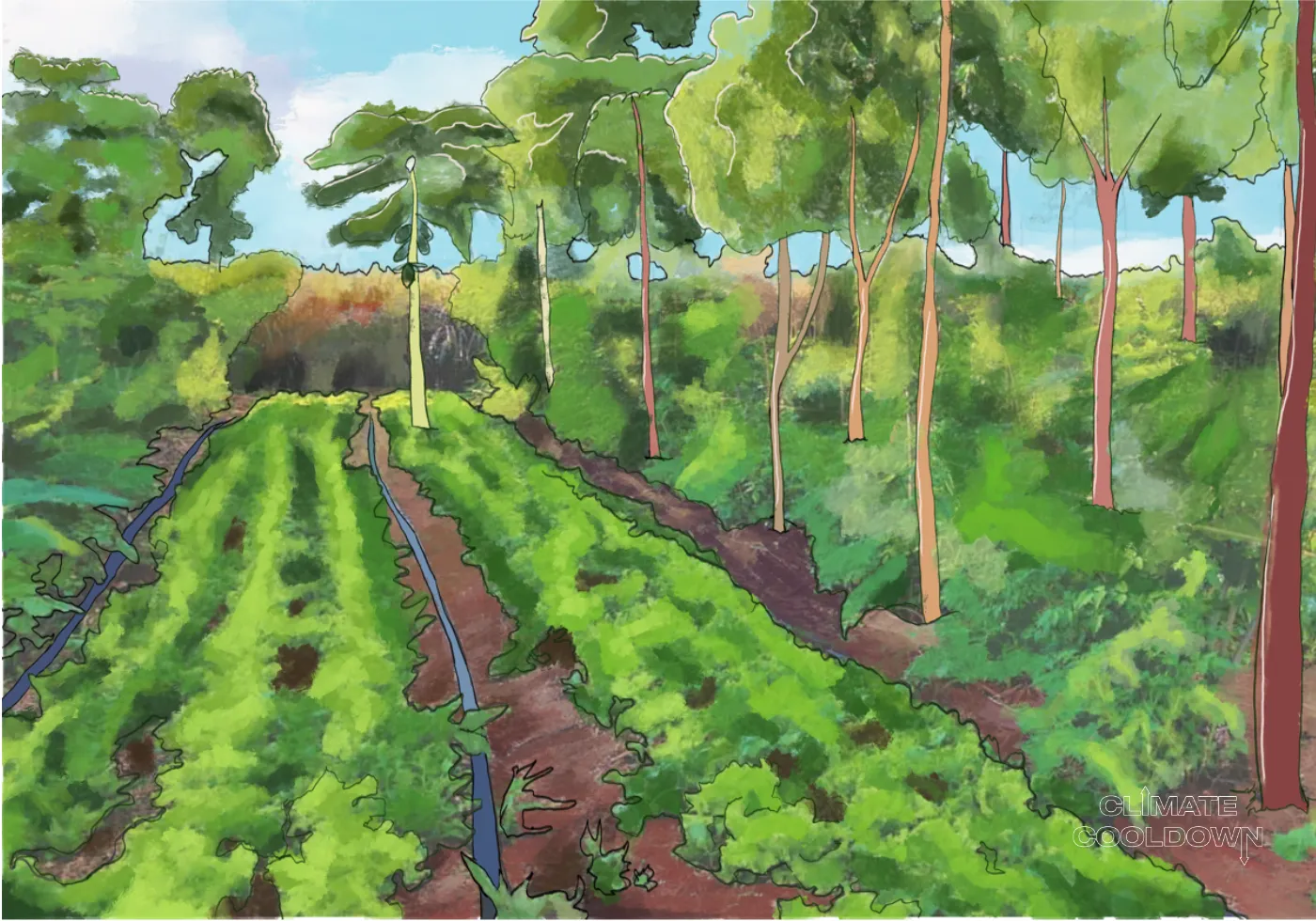
Regenerative agriculture is an approach to farming and land management that focuses on improving and revitalizing the health of ecosystems, soil, and biodiversity.
In the game
In the game Climate Cooldown, "Regenerative Agriculture" is a Cooldown card which helps heal the land through revitalizing the health of ecosystems and soil while also producing needed food resources.
Prospective degrees
Sustainable agricultureSoil science
Careers
Regenerative farming consultantSoil health researcherSpecialist in climate smart agriculture
For the classroom
Discussion prompts by grade level
- What is regenerative agriculture and why is it important?
- Can you think of any benefits of regenerative farming practices?
- Describe the principles of regenerative agriculture, such as soil health, biodiversity, and ecosystem resilience.
- Discuss the environmental and social benefits of regenerative farming, including carbon sequestration and soil conservation.
- Examine the challenges facing conventional agriculture and the potential of regenerative practices to address environmental degradation and climate change.
- Evaluate strategies for promoting regenerative agriculture through policy incentives, market mechanisms, and education.
- Critically analyze the scientific evidence and practical implications of regenerative agriculture for soil health, water quality, and agricultural sustainability.
- Discuss the socio-economic barriers and opportunities for scaling up regenerative farming practices at the local, regional, and global levels.
Connects to